Working Paper
Unequal Global Convergence
We study how structural transformation toward high-skill services changes regional convergence around the world.
Draft →PhD Candidate in Economics · Universitat Pompeu Fabra
Macro Development · Economic Geography
I study how families and geography shape structural transformation and economic development. My work combines large-scale data, quasi-experimental evidence and quantitative spatial models.
I am on the 2026–27 academic job market.
Advisors: Elisa Giannone and Dávid Krisztián Nagy.
luca.looser@upf.edu
The Role of Families in Structural Change
Family ties can anchor workers to existing industries and locations, but relatives in expanding sectors and growing destinations can help others pursue new opportunities.
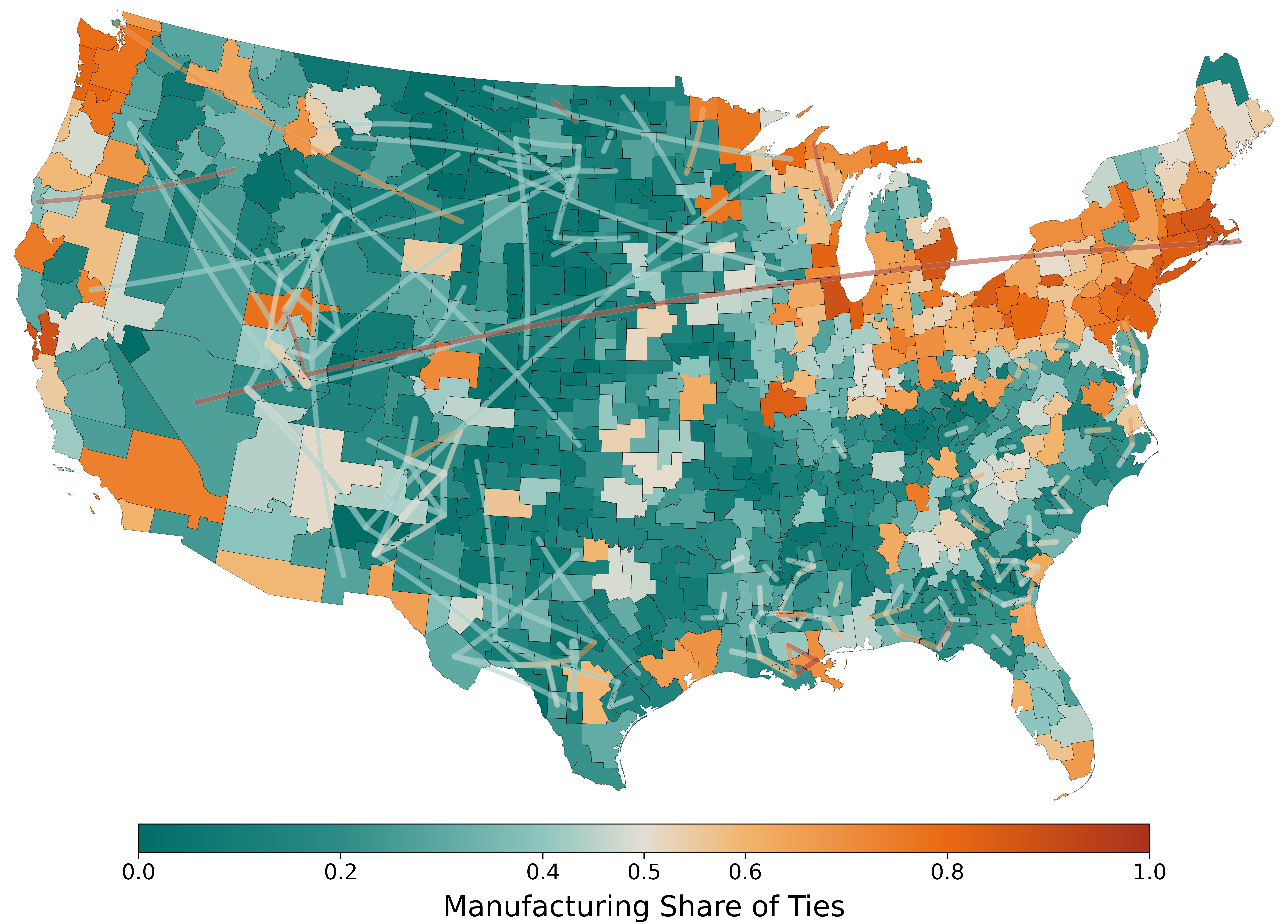
Using reconstructed family ties for 32 million individuals, I show how these opposing forces shaped U.S. structural transformation from 1880 to 1970. As relatives entered manufacturing and moved to more industrialized places, the connections they created offset about 90% of the initial drag of family ties by 1970. Moving vouchers can also generate lasting gains for family members left behind.
We study how structural transformation toward high-skill services changes regional convergence around the world.
Draft →We use temporary import restrictions in Thailand to study persistent sectoral reallocation and intergenerational responses.
Abstract →Marriage and the Geography of Opportunity
Children inherit not only resources from their parents but also a geography. Using linked U.S. families from 1880 to 1950, I show that marriage expands family-connected places, shapes where couples settle and changes the destinations available to the next generation.
Draft →